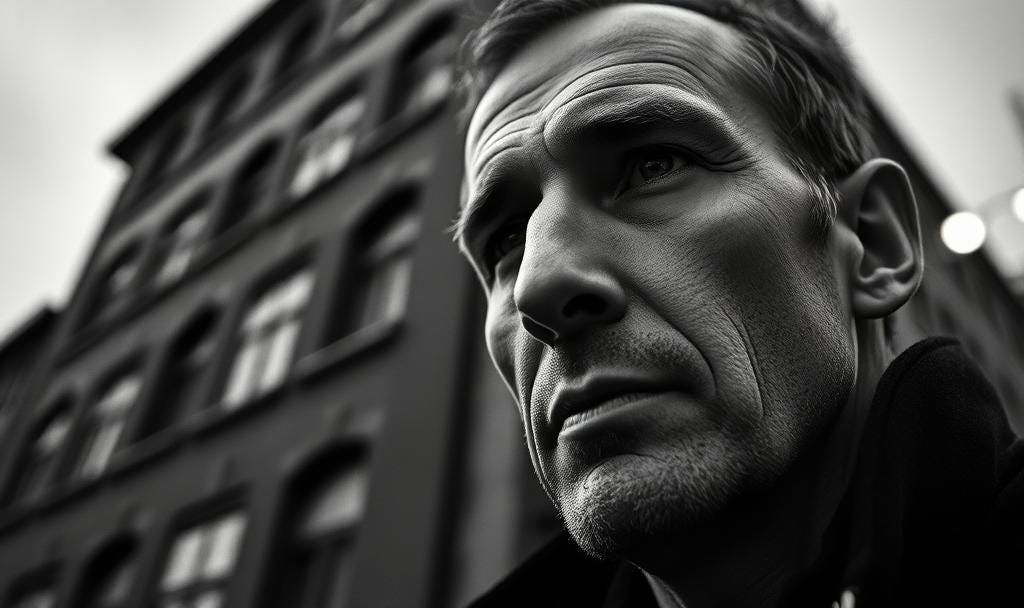
Building #46
A fictional building for a new paradigm?

I’m starting to plan out a new piece of work within the genre of historical fiction. The story will focus on the design and construction of a new building in a fictional location at a time yet to be decided.
The concept behind the new work is to gather together ideas I’ve accumulated through my research on historic buildings, but this time to engage with a different type of community, to some extent as this ‘Building Passions’ Substack has tried to do since it began in 2023.
One area of my doctoral research was looking at the phenomenon of paradigm shifts: historical transition points, which may well look like revolutions, where one can identify significant breaks from the past.
The classic case for this would be the First Industrial Revolution that took place in Britain during the 18th and 19th centuries, with key developments such as the steam engine, the large-scale factory and reliable transport networks over seas and along canals and then railways (see Anton Howes’ Substack for more on some of the inventions). It was something I studied as part of an undergraduate degree in economic and social history and then a masters in the history of technology, back in the 1980s and 1990s.
There are many other such paradigm shifts in all types of history, and my thesis looked specifically at a transition from traditional building materials such as timber, brick and masonry, to a more significant use of metallic systems such as iron, steel and reinforced concrete, all taking place in late 19th and early 20th century France and Belgium. This paradigm shift was evidenced through historic urban buildings that used an early reinforced concrete and cement ‘materials-system’ as I call it - some of these have sadly disappeared, but many still fortunately remain with us, despite the continual threat to such structures from their longevity and possible owner neglect.
Returning to the concept for the new piece of work, it will include within it a paradigm shift that is connected to the new fictional building and the people who are involved in its design and construction. The transition point will centre around a single family business that is fighting with competitors in a changing world, one where traditional values are becoming eroded by new expectations. Will the family survive this turbulent period? Will they succeed in creating a building that is both functional yet aesthetically pleasing, and that fits well with the growing demands of their local community? Will it personify the new paradigm?
All these are questions to be answered in due course. In the meantime here is an AI produced image of a fictional building with perhaps the owner, a resident, the architect, an engineer or a contractor standing in front of it (who knows?).