Building #47
The Reform Club by Sir Charles Barry (1841)

Building #37 considered the Travellers Club in London by Sir Charles Barry completed in 1832. Next door to it and nine years later, a new club building by the same architect was opened to its members, including one Isambard Kingdom Brunel. This was the Reform Club (see my below photograph of it with the Travellers Club just to its left).
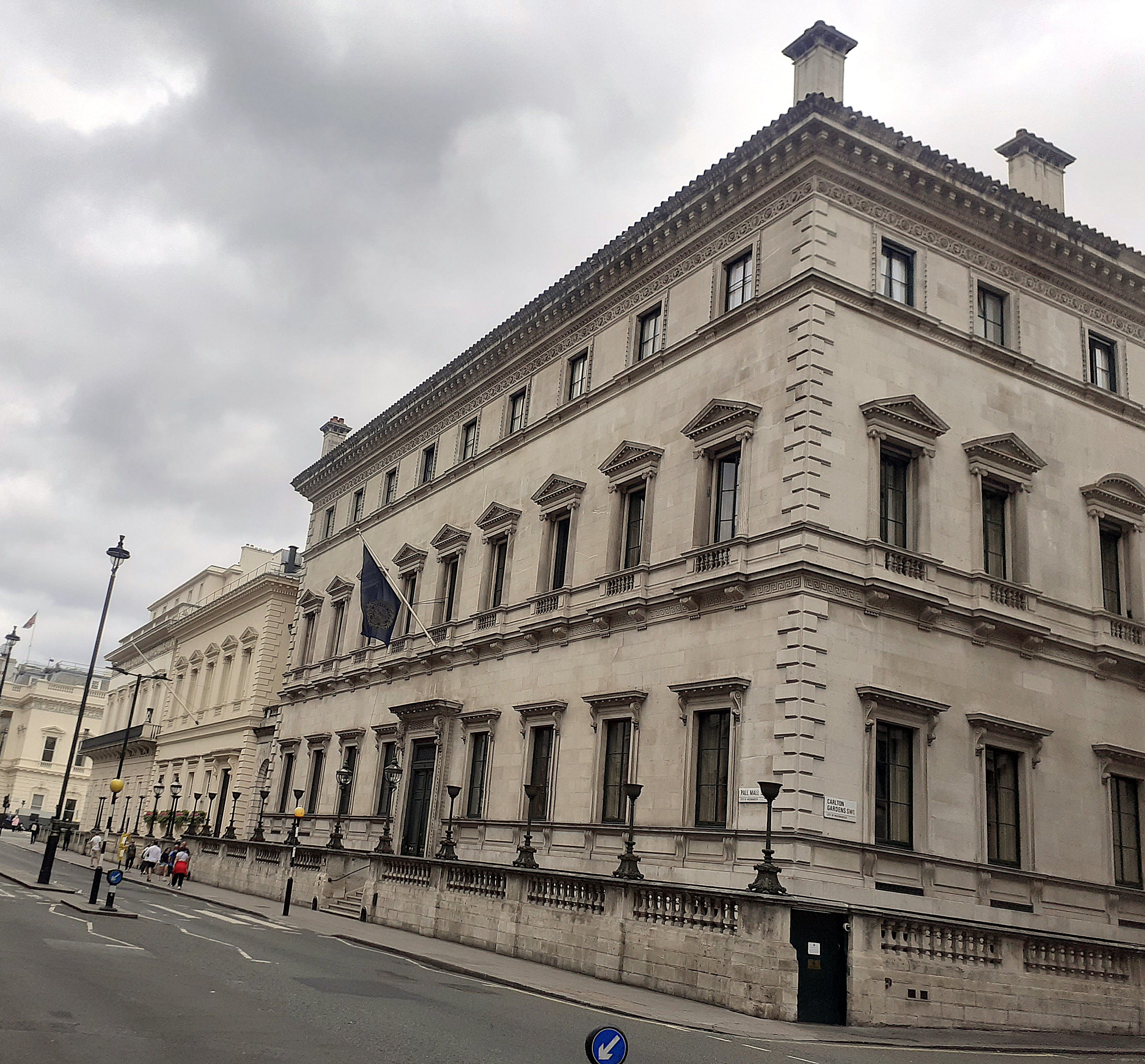
The Reform Club was established in 1836 after the passing of the Reform Act of 1832: this was key British legislation that extended voting for Members of Parliament to a more ‘democratic’ franchise. It had been supported by opponents of the aristocracy-led status quo that had prevailed for centuries.
Architecturally speaking, the new home of the Reform Club was a development from the neighbouring Travellers Club. Both buildings had a New Italianate style to them, but this was plainer on the earlier and smaller club, whereas the newer one was less restrained and more reminiscent of an actual Italian original - the Palazzo Farnese in Rome (see below image).
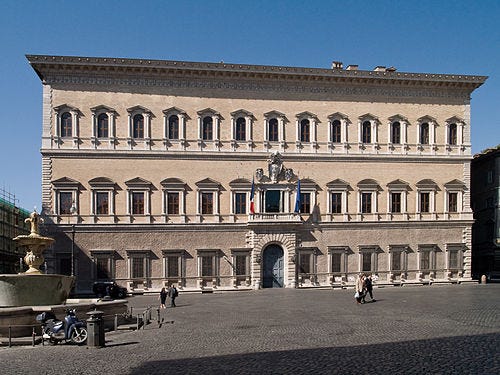
This magnificent palazzo was completed in 1589 with contributions from the great Italian artist-architect Michelangelo, and it currently houses the French Embassy in Rome.
The interior of the Reform Club included a beautiful glass-covered hall, which in a Mediterranean climate would have remained open to the elements but clearly this was more suited to the cold and wet London of the winter months. The ornate splendour of the rooms was matched by the lavish layout of the kitchens, which were planned in active consultation with the club’s famous chef, Alexis Soyer.
There were issues with the huge cost of the build. After independent arbitration, Sir Charles Barry was awarded the equivalent of 5% of this, but he was not used again by the Reform Club members. In 1878 extensive redecorations were carried out to his father’s original designs by Edward Middleton Barry (for more on him see Building #36).