Building #54
Building research is like investigative work

I posted briefly about the Royal Liver Building in Liverpool under Building #42 after I had first seen it on a trip in May this year to the home of the Fab4 (see below photo taken by me).
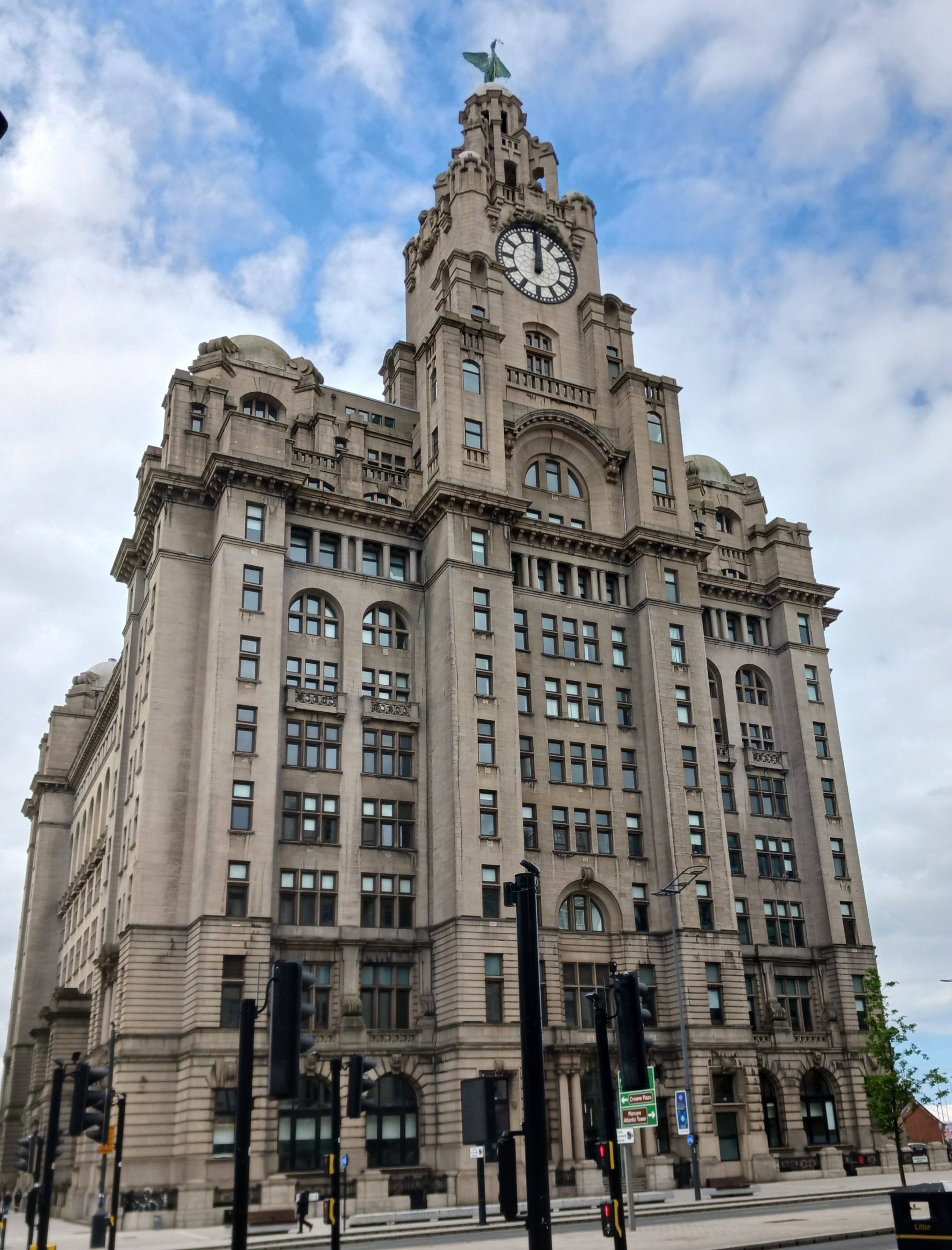
Since May I’ve been in touch with a number of people about the history of the building.
The first contact I made was with the official tour of the building. They were helpful in providing insight into its original design and construction, emphasising the role of the British architect, Walter Aubrey Thomas (1864-1934), about whom I had known nothing. After an online search I came across a modern day descendant of the architect who was keen to share family information about him.
Next I contacted the Skyscraper Museum in New York, which has an online exhibition on historical reinforced concrete skyscrapers, including an exhibit on the Royal Liver Building as one of the world’s earliest of this typology. Again, the museum pointed me to further sources of information, emphasising this time the role of the engineers and contractors.
Finally, I got in touch with former colleagues at the Institution of Structural Engineers in London, who have excellent source material about the history of global structures built using reinforced concrete. Reading accounts from the period (just before the outbreak of the First World War) is often the best way to get a sense of the design and technical challenges faced by the original architects, engineers and contractors. In the case of the RLB it confirms that the unique project was a team effort.
A major task still left to do would be to go through the files available online from the City of Liverpool’s Planning Portal that cover significant developments to the RLB, which is a listed building (Historic England Grade 1). This can be onerous and might even require going up to Liverpool to look at documents in person - involving decisions about whether to commit any time and expense to the exercise. How much information is needed to understand fully the story a historic building? Good question!
What happens with the results of all the above?
It feeds in to the bigger picture about the initial use of an innovative building technology more than a century ago, examined in depth in my doctoral research project. In other posts in this Substack (see Building #51) I look at models that help describe the past and might also be applied to the present. This is all used to inform the planning and drafting of a new book that will employ the medium of historical fiction to engage with readers about building history.